Traditional, Vastu Pooja Room / Unit Designs
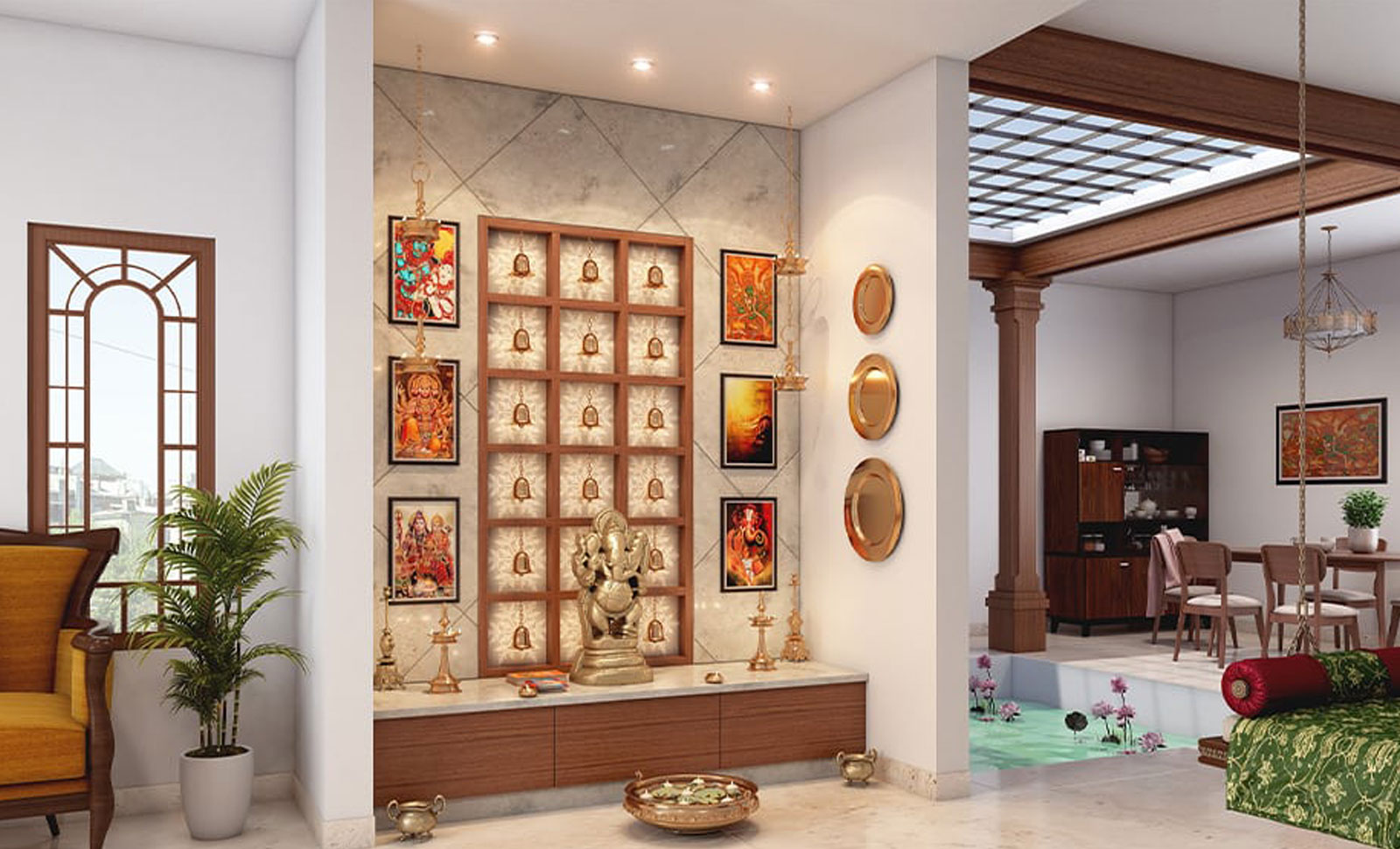
A pooja room is a sacred space in the home where people worship and connect with divine energies. The interior design of a pooja room can include items like idols, lighting, and wall decor.
Here are a few ideas to consider for your Pooja Room:
- 1. Location and Layout: Quiet Corner: Choose a quiet corner or a secluded area of your home to ensure peace and tranquility. Direction: Traditionally, a Pooja room should be in the northeast corner of the house, facing east or north.
- 2. Design and Structure: Elevation: If possible, elevate the Pooja room slightly from the ground level. This is believed to bring positive energy. Doors and Windows: Ensure proper ventilation with windows, and use doors that provide privacy and help contain the sanctity of the space.
- 3. Materials and Finishes: Natural Materials: Use natural materials like wood, marble, and stone for a serene and spiritual ambiance. Finishes: Opt for smooth, easy-to-clean finishes that reflect purity and cleanliness.
- 4. Lighting: Natural Light: Maximize natural light to keep the room bright and inviting. Ambient and Task Lighting: Use soft, ambient lighting along with focused task lighting for reading or performing rituals.
- 5. Storage Solutions: Cabinets and Shelves: Incorporate cabinets and shelves to store prayer books, incense, oils, and other essentials. Hidden Storage: Consider hidden storage solutions to maintain a clutter-free space.
- 6. Lighting: Natural Light: Maximize natural light to keep the room bright and inviting. Ambient and Task Lighting: Use soft, ambient lighting along with focused task lighting for reading or performing rituals.
- 7. Seating: Comfortable Seating: Provide comfortable seating options like cushions or stools for extended prayer sessions. Mats or Rugs: Use mats or rugs to define the seating area and add comfort.